
Workshop descriptions
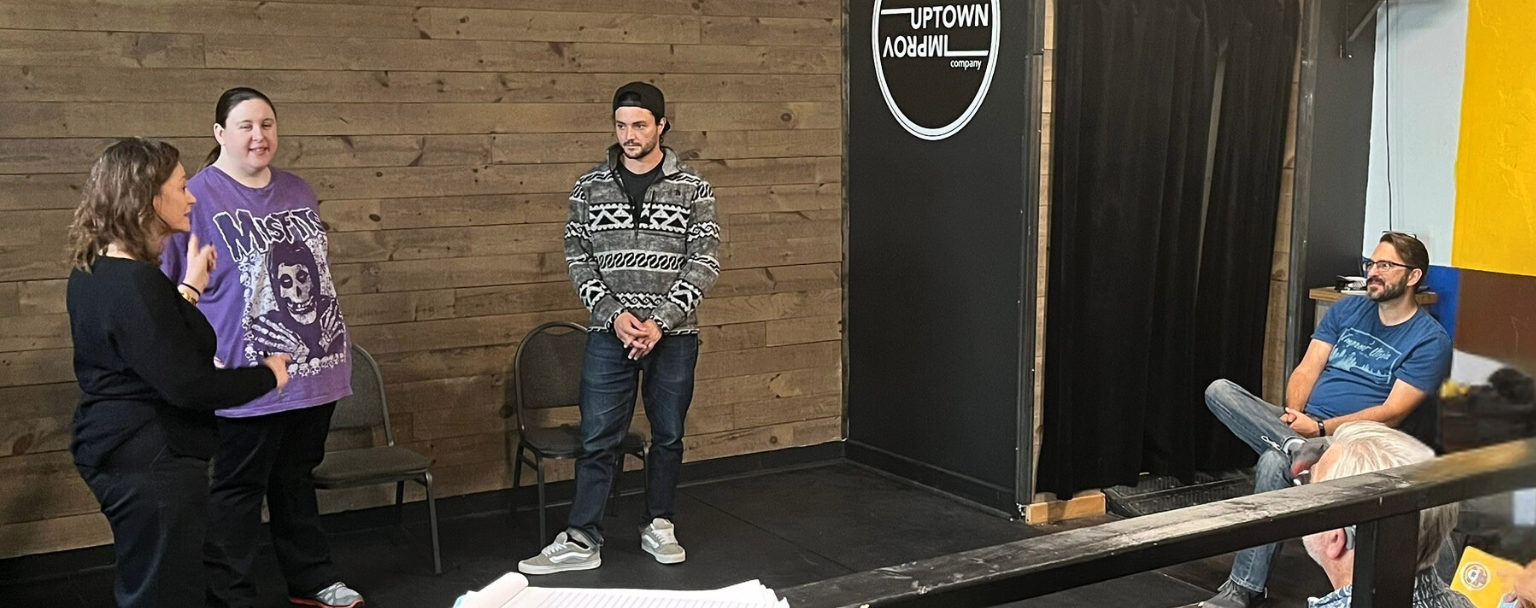
Each Uptown Improv Academy weekend features focused workshops led by visiting instructors. Participants train in small cohorts and explore a range of approaches to scene work, character development, and ensemble dynamics.
Below is an overview of the sessions that will be part of the April Academy weekend.
HOLLY MANDEL
This workshop explores how improvisers can deepen their understanding of core fundamentals and begin to take greater ownership of the tools they use on stage.
Participants will explore the idea that scenes require “fuel” and examine the different ways improvisers can keep adding energy and direction to a scene. Through this work, performers learn how the principle of “Yes, And” can support organic scene growth rather than forcing ideas or trying to “write” the scene.
INTERMEDIATE TRACK: EXPANDING YES, AND
This session introduces Holly’s framework of Vertical vs. Horizontal playing.
Horizontal playing focuses on plot and events — rushing the scene forward by trying to make things happen. Vertical playing focuses on character depth, behavior, and specificity, allowing the character’s perspective to shape the scene.
Participants will explore how slowing down and committing to character can create richer and more compelling scenes. The session may also introduce Holly’s Crazy Uncle Joe format (also known as clap-ins), a loose and playful long-form structure built around thematic connections rather than traditional narrative progression.
Advanced Track: Vertical vs. Horizontal Playing
On Sunday morning, Holly will lead a workshop for the Advanced Track focused on the craft of teaching improv.
This session explores how improvisers can structure exercises, guide students through scene work, and provide effective coaching and notes. It is designed for performers interested in teaching or leading workshops within their own communities.
SUNDAY SESSION: TEACHING IMPROV
BILLY SOCO
Billy’s signature workshop Familiarity Breeds Content focuses on building scenes from connection, shared history, and specificity rather than from pressure to invent.
Participants will work on establishing shared history, making relationship-based choices, and using details drawn from lived experience to create scenes that feel alive and playable from the start. Through exercises and scene work, we’ll explore how stronger connections, clear points of view, and specific details can lead to more authentic and sustainable scene work.
The goal is to help improvisers build scenes that feel less forced and more naturally engaging, while strengthening the habits that support confident, connected long-form play through practical application within a long-form structure.
Intermediate Track: Familiarity Breeds Content
Advanced Track: Playable, Patterned, Connected
This session focuses on pulling clear, playable initiations from inspiration, recognizing and building patterns without forcing them, and staying connected to the larger piece through strong listening and ensemble awareness.
Using the Armando as our vehicle, we’ll explore how grounded choices, intentional edits, and thoughtful support create cohesive and dynamic shows. Participants will practice the form to expand their play, build purposeful repetition, and discover surprising, fun connections.
Advanced Track: Sustained Point of View
Billy will lead a rehearsal-style ensemble development session for the Intermediate Track. Participants will perform scenes and receive focused coaching on responsiveness, listening, and group dynamics.
This diagnostic-style session emphasizes coached repetitions, note application, and exploring the habits that help a group become more cohesive and performance-ready over time.
SUNDAY SESSION: ENSEMBLE DEVELOPMENT
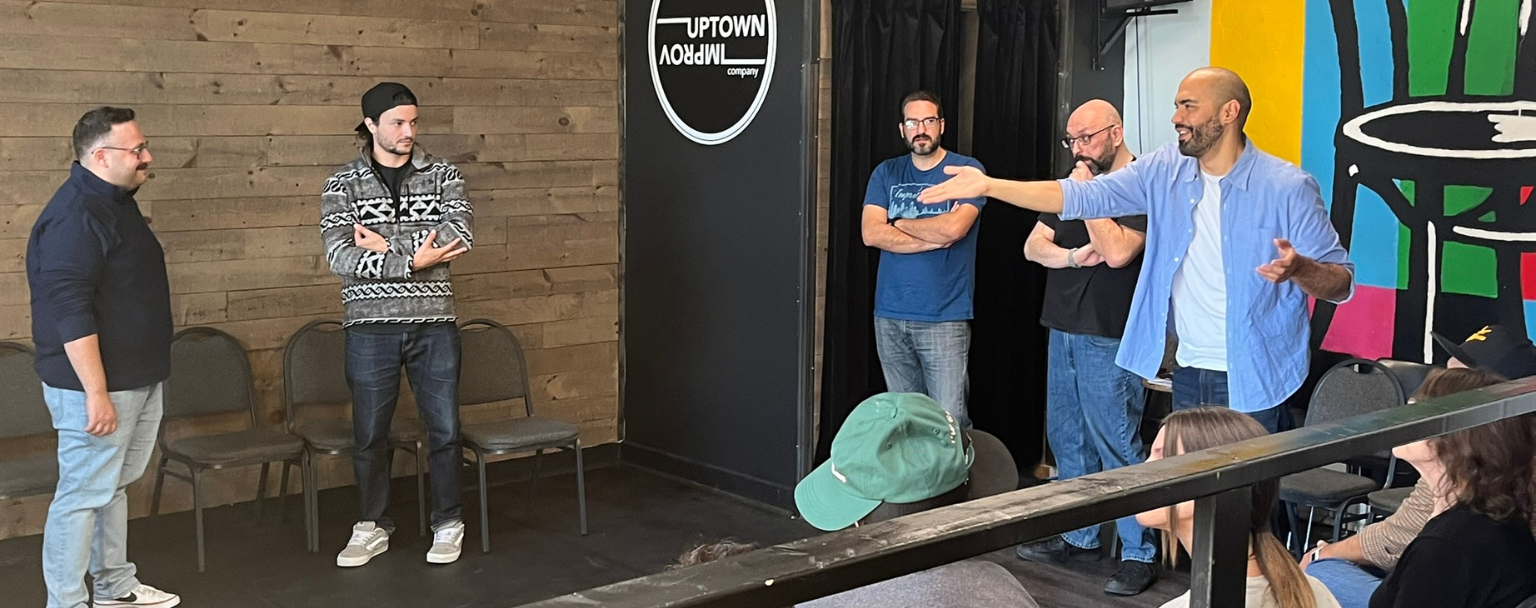
SUNDAY AFTERNOON: UPTOWN ENSEMBLE DEVELOPMENT (12:30-2:30PM)
The weekend concludes with a special Uptown Ensemble Development session open to advanced Uptown students interested in joining a flagship ensemble that meets regularly and performs weekly at the Uptown. This session will focus on coached ensemble work and group dynamics as part of the selection process. Participation does not guarantee placement in the ensemble.